After delving into astrology lately, I’m a bit surprised I hadn’t studied it sooner. For someone who’s been Pagan most of his adult life (not to mention also gay), I belong to two communities that are pretty enthusiastic about the star stuff.
But there’s no time like the present, is there?

As our society hurtles through calamity and I fast approach my midlife crisis, there is so much uncertainty, instability, and dread that I find it hard not to turn to the heavens in desperation for some glimpse of direction or guidance in our sick, sad world.
The more personally invested I’ve become in astrology, the more one basic problem has been a thorn in my side: if astrology is supposed to counsel us on life and romantic matters, it damn well ought to know whether I belong with a man or a woman! You’d think for as popular as astrology is in gay circles, that question would have been handled long ago. And yet… It hasn’t.
So, I’ve scoured different sources to pull together whatever guidance I could find, comparing and contrasting different approaches for reading whether a man is gay in his birth chart — from Modern Western Astrology, to Indian Astrology, to even ancient Hellenistic texts. This blog will give an overview of these approaches, discuss some of their origins and efficacy where possible, and finally connect the common links where they exist.
My focus has been on male homosexuality here, partly because that is what’s most relevant to my personal life, but also because it is a sprawling and complicated enough topic to fill several blog posts on its own. But for readers who are interested in the rest of the LGBT spectrum, there is some overlap and many of the sources cited here explore those topics on their own, too.
This blog post won’t get into the valid question of whether astrology theoretically could, or ethically should, be picking out gays from the horoscope. It’s not that sort of philosophical debate. The fact is, many people try it (and evidently have for thousands of years). What I want is an answer to whether any of it works, and what that means personally and spiritually as a gay pagan.
I should warn the uninitiated that astrology gets technical very quickly. I hope this post will still be interesting and useful for those who are impervious to all the jargon.
Table of Contents
Early Western Astrology
Modern Western astrology’s origin can arguably be traced to Ptolemy, a 2nd Century polymath based in Egypt. Until recently, his work Tetrabiblos (also known as the Almagest), was the primary Hellenistic source that remained well-known to Western astrologers. In it, he supplies a technique for determining sexual orientation in the birth chart.

Under a section lovingly titled “Diseases of the Soul,” Ptolemy treated sexuality as a spectrum that ranged from virile to effeminate. Different compounding factors could push the needle one way or the other. He considered masculine and feminine signs of the Zodiac to increase the masculinity or femininity of a native’s sex drive, depending on where the Sun, Moon, Mars, and Venus were positioned in the birth chart. Mars and Venus were also considered to be made more masculine or feminine depending on whether they rose in the sky as morning or evening stars.
Naturally, most people have some mix of masculine and feminine placements in their birth chart, and Ptolemy implies that a balance is needed. The extreme placements are what Ptolemy considered problematic, even for their respective genders. For example, in women, he wrote that all-feminine placements would make them “exceed in the natural,” and become “adulterous and lustful.” But for men:
The men, on the contrary, become effeminate and unsound with respect to unnatural congresses and the functions of women, and are dealt with as pathics. (Book III, Chapter 14).
(“Pathic” meaning a man who is the receptive partner in sex).
Ptolemy’s sexual spectrum may sound progressive for its time, but there are clear problems with it. For starters, its underlying premise assumes a binary that conflates gender expression, libido, and sex role all into one. It offers no way to account for something as simple as a masculine gay man, for example.
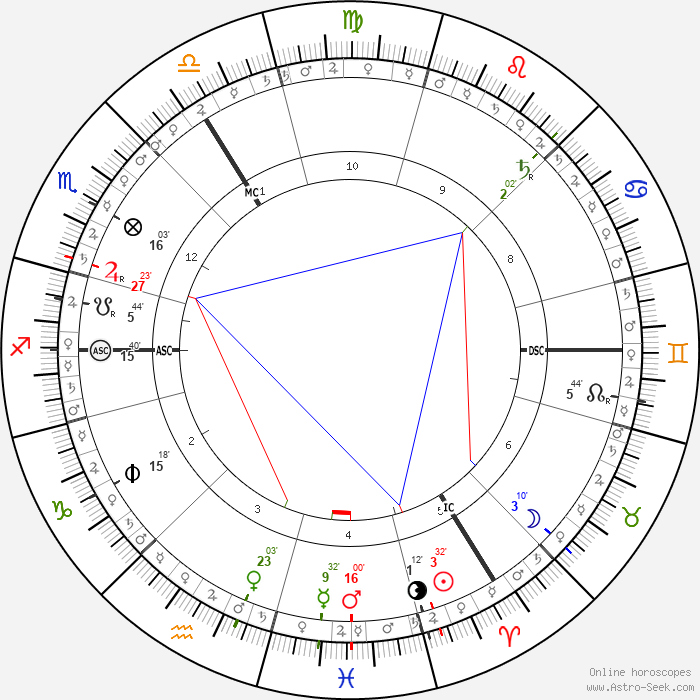
Most importantly, it just doesn’t seem to work. To test the technique, I pulled up Elton John’s birth chart and found each of his four planets in alternating signs (meaning he has a balance of masculine and feminine). There is no indication he is gay at all according to Ptolemy, despite Elton John being famously so.
As far as I can tell, pre-modern Western astrology’s treatment of sexual orientation was infrequent, but primarily followed Ptolemy’s prescriptions on the topic, aside from some writers who also referenced bits of Firmicus Maternus (whose techniques differed considerably from Ptolemy’s). But in the 19th to 20th Centuries, this began to change (as we will get into below).
As time went on, many Hellenistic techniques were increasingly lost, while others gradually corrupted or evolved to become quite different from before. In modern times, the invisible planets such as Uranus, Neptune, and Pluto were discovered and added to Western astrology. Finally, theories from Freudian and Jungian psychology merged with the astrological field. Jung considered birth charts to reveal a “psychological description of character,” and this has become the primary lens for Modern Western Astrology ever since.
All of this would go on to shape the techniques that modern astrologers devised to look for homosexuality in horoscopes.
Modern Western Astrology
These days, if you Google how to check whether someone is gay in their horoscope, you will probably get results from Reddit and Tumblr that regurgitate popular wisdom revolving around:
- The planet Uranus
- The sign Aquarius (which Uranus rules)
- The 5th, 7th, and 8th Houses (which can pertain to sex, marriage, etc.)
There’s a very clear belief in Uranus being the gay planet, and these factors are usually said to carry out gayness through some aspect or placement with respect to Venus or Mars.

Secondarily, you’ll find Mercury and His sign of Gemini cited as factors, or the sign of Cancer. People also like to toss in the other invisible planets (Neptune and Pluto), the 11th and 12th Houses, and various other newfangled, exotic things like Chiron and Lilith for good measure.
These suggestions are all vague. No specific configurations are provided. Just any old thing with those ingredients “seems kinda gay,” in the minds of lay and pop astrology audiences who have, “seen a lot of this,” in their friends’ birth charts.
I can’t rule out that people have genuinely made these observations on their own, but it is worth pointing out that this all sounds very derivative of what had been laid out by certain professional astrologers in the early 20th Century:
20th Century
For example, the influential English astrologer Charles Carter made almost the exact same proposals in his Encyclopaedia of Psychological Astrology (1924). He explains all of this under the section helpfully titled “Immorality (Sexual)”:
The discovery of Uranus and Neptune has thrown much light upon this subject. Their afflictions, especially if affecting the 5th and 7th houses, invariably concern the morality and incline to irregular behavior. Most of all this seems to occur in the case of violent oppositions between Taurus and Scorpio involving the 5th or 7th house …
… Homosexuality is said to be nearly always referable to Uranus. In a case before me Sun and Venus are in Aquarius, trine Uranus, who is sq. Jupiter ruling the 5th, while Mars, rising in Scorpio, squares Sun and Venus.
(This description interestingly has a lot in common with Carter’s own birth chart, but I digress…)


He further states that, “Neptune causes neurotic conditions and what is often little short of nymphomania or sexual obsession.”
Some of the other popular factors cited for homosexuality online seem to align with Carter’s proposals elsewhere on topics that indirectly (and stereotypically) are often associated with homosexuality:
“Effeminacy,” he says, “is nearly always due to an overplus of the Cancer and Libra influences. The former tends chiefly to make a man feminine, i.e. receptive, sensitive, and sympathetic, while the latter inclines to a truly effeminate manner—foolish and affected.”
Elsewhere he notes that,
The Moon afflicted by Saturn, or a prominent Cancer, often produce in men a “mother-fixation.”
German and Dutch Contributions
Another influential astrological work which was heavily devoted to this topic is a German publication titled Charakter-Konstellation (1928). Its author, Karl-Günther Heimsoth, was a physician, psychoanalyst, and gay activist, as well as a close associate of the infamous Ernst Röhm himself. (Of course you can’t trace the history of modern Occult arts without them worming their way back to Nazism, somehow.)
Heimsoth was initially a member of the Nazi party who seemingly defected to the Communist Party before being ultimately executed in the purge of 1934. One associate recollected, “just like the clairvoyant Hanussen, [Heimsoth] was full of dangerous secrets and was one of the first to be killed.”
In any case, his book seems to have long remained a reference on the topic of homosexuality in astrology, and was seen fit to receive an English translation by the American Federation of Astrologers in 1978.
Heimsoth clearly follows Carter, quoting his work and following his technique:
[Certain] degrees of the zodiac are said to have an influence that predisposes to homosexuality, and these are 25° Leo-Aquarius and 8° Aries-Libra when the ascendant-descendant or the cusps of the 5th-11th houses fall on these degrees, and this naturally applies to any planet which is significator of these things and falls in these degrees. Charles E. O. Carter made this observation, but my own data are not sufficient for me to pass judgment on it.
I had interpreted Carter as saying those degrees apply to “sexual immorality” in general rather than to homosexuality in particular, but I suppose it’s up to interpretation. Most subsequent authors seem to follow Heimsoth here.
Heimsoth also reiterates “[Uranus] has the strongest relationship to homosexuality and to the male eros,” while claiming, “I have found Neptune to have the closest relationship to female homosexuality, and to psychoses as well.”
Problems with Modern Techniques
Heimsoth critiqued astrological techniques, including older beliefs he has read, saying,
It is striking that even in the earliest astrological literature mention sometimes is made concerning the ‘bad’ aspects of Venus (the square and the opposition) with the malefic planets Saturn or Mars and, later, with Uranus. These sweeping generalizations are erroneous, yet there is also a kernel of truth contained in them. … If the squares and oppositions of Mars and Saturn to Venus were always taken as indications of homosexuality, then for example, in the year 1905 all those born from June 6 to 20 …, July 7 to 13 …, September 21 to 28 …, and December 4 to 8 … would have to be considered homosexual. This is, of course, not the case.
This is an important consideration when weighing the mathematical validity of such prescriptions. Heimsoth does not state where he encountered these ideas, although they bear similarity to some passages found in Indian and Hellenistic texts.
Heimsoth points out that aspects and placements pertaining to Uranus alone especially can’t be predictive, because they could apply to about one-third of the population, which is much too high.
Heimsoth’s approach instead was to search each chart individually for additional signs of possible neuroses or latencies that he considered relevant from a psychoanalytical point of view. These were usually indicated by things like planets being retrograde or “intercepted” (i.e., placed in signs that don’t contain any Placidus house cusps). It’s not clear to me how this approach solves the mathematical issue Heimsoth highlighted with older techniques, though.
I am not alone in wondering how useful Heimsoth’s approach could be. Dutch astrologer Wim van Dam (1983) judges Heimsoth’s chart readings to be “sometimes so far-fetched they are comical.” For example, Heimsoth believed numerous public and figures such as King Edward VIII were secretly homosexual. I’ll take Van Dam’s word for the quality of Heimsoth’s analysis (Charakter-Konstellation elaborates 30 different charts in a single chapter, and I ain’t reading all that).
“Uranian Love”
Anecdotally, my birth chart matches some Uranian prescriptions for homosexuality, as does a gay friend’s of mine – e.g., having Venus in Aquarius opposite the Ruler of the 7th House. So I cannot rule out these claims that Uranus is an indicator of homosexuality. But still, it is worth interrogating the rationale behind this belief:
For starters, many people once assumed homosexuality to be a recent invention of the 19th Century. This probably motivated them to look to the recently discovered planets of that period as “the cause” of it. Furthermore, in 19th Century gay social circles, poets like John Addington Symonds and Oscar Wilde notably referred to themselves as “Uranians,” and homosexuality as “Uranian Love.”

“Uranian Love” is not about Uranus Himself, so much as His daughter. It derives from remarks made by Pausanias in Plato’s Symposium, where he identifies two different Aphrodites: The first, Aphrodite Ourania (“Heavenly Aphrodite”), was born of Uranus’ seed which fell into the sea, in contrast to the second, Aphrodite Pandemos (“Common Aphrodite”) Who was born of Zeus and Dione:
The Love, then, which belongs to Common Aphrodite, is really and truly common and works at random; and this is the love that inferior men feel. Such persons love firstly women as well as boys; next, when they love, they love bodies rather than souls … But the other Love springs from the Heavenly goddess, who firstly has had no share of the female, but only of the male; … consequently those inspired by this love turn to the male, because they feel affection rather for what is stronger and has more mind.
I won’t even begin to unpack the issues with Pausanias’ dialog here, but it reveals why 19th Century gay poets started alluding to themselves as “Uranian,” and hence why I believe astrologers may have literally started seeking “Uranian Love” in horoscopes.

Van Dam’s Alternative Theory
In his book Astrology & Homosexuality (1983), the Dutch astrologer Wim van Dam points out that his own birth chart has Uranian features to the point he could be mistaken for a homosexual, despite being straight. He finds Heimsoth’s psychoanalytic method of sleuthing for “neuroses” to confirm or deny a homosexual diagnosis unsatisfactory. He instead discards these Uranian and Freudian approaches entirely to pursue his own technique.
Van Dam starts with the premise that, if astrology can precisely predict anything, it must be capable of diagnosing extreme conditions people are born with, such as microcephaly. As a case study, he compares the birth charts of two microcephaly patients, initially observing no clear patterns or commonalities that stand out. However, when he derives a “9th harmonic” chart from these horoscopes – a Westernized adaptation of Vedic Astrology’s navamsa, which is used to provide deeper horoscopic analysis – he is supposedly able to find a pattern. Satisfied that he has proven the efficacy of 9th part divisions, he then applies this technique to dozens of horoscopes for known gay men.
Although Van Dam expected Venus and Uranus to be noticeably linked in gay charts, he was disappointed to find this was not the case:
Navamsa conjunctions between Venus and Uranus occur no more often than ordinary aspects do, and certainly no more often than might be expected from a collection of horoscopes made at random. In retrospect, this result seemed to be quite logical. Even navamsa conjunctions between Venus and Uranus have little that is individual about them. If we were to consider a conjunction of this sort a decisive factor, we should have to accept that even with a small orb, and a quickly moving Venus, the conjunction would be in effect for at least twenty-four hours. We should then be compelled to conclude that for a period of twenty-four hours, every so often, all male births would bring homosexuals into the world. There might still have been a way to use this aspect if it in turn also made a strong aspect with certain house cusps in the charts of homosexuals, but there was definitely no sign of this.
Van Dam states he was astonished to instead come to a simple conclusion:
“In the charts of homosexuals, it is not so much Venus that is afflicted as the Moon. And by afflicted we understand a navamsa conjunction with Saturn or a strong influence from houses six or twelve.”
While Van Dam touts this as a totally novel discovery, it in fact matches E.O. Carter’s prescription for a “mother fixation in men” (an old psychoanalytic trope about homosexuality) as noted above. While Van Dam acknowledges his technique could be interpreted that way, he personally dismisses the psychoanalytic interpretation.
Most of the birth charts in Van Dam’s book are anonymous. One example of a public figure he provides is Gerard Reve, a famous Dutch writer of “avowedly homosexual” literature, whose chart does not conform to the pattern. “Saturn preserves a low profile. Possibly Reve was not a homosexual in his youth,” Van Dam questionably concludes, rather than acknowledging this to be a failed example of his technique.

Van Dam explains the underlying meaning of his technique like this: “The sun and moon serve as archetypal representatives of the male and the female. … [If] the moon is with surprising frequency weak (afflicted) in the charts of male homosexuals, this leads to an unexpected but not altogether impossible conclusion: what distinguishes homosexual men from heterosexual men is not, as is so often supposed, a lack of manhood (which might show up in an afflicted sun) but, strange to say, a lack of femininity.”
That might seem counterintuitive if one stereotypes gay men as effeminate, and also assumes the birth chart is a glimpse into the inner psyche of the native. But it’s less surprising from a traditional point of view, where the horoscope described more outward and objective features of the native’s life. Rather than lack of femininity being a matter of the native’s personality and self expression, it could point to the objective lack of womanhood in a gay man’s relationships – something that is straightforwardly true, no matter how flaming the native may-or-may-not be.
Van Dam himself warns, “The investigation described [in this book] relates to a small sample of some 40 cases and therefore our findings cannot be regarded as definite.” How common it could be in gay men’s charts remains to be further studied, and the technique still has not caught on popularly like Carter’s did.
Personally, this “Moon afflicted by Saturn” component is true in my regular birth chart, but there is nothing outstanding in my 9th division chart, or much to do with houses six or twelve. Van Dam says that these configurations need not be restricted to the 9th chart, but if that’s true then it seems we would wind up with the same problem he noted earlier for other techniques having “little that is individual about [them].”
So anecdotally, Van Dam’s method has proven no more effective for me than the Uranian proposition was. The two techniques could possibly reinforce each other in my chart rather than be treated as mutually exclusive, but then that begs the question of how many different factors, or how complex of a configuration, does one need to secure a verdict?
Ancient correspondences
Something else worth discussing is how Van Dam’s approach turns out to seem rather traditional, not only for drawing on the Vedic navamsa technique, but moreso for attributing homosexuality to Saturn – something that both Vedic astrologers and Hellenistic texts were known to do. Hellenistic texts were still largely left unstudied at the time of Van Dam’s publication, and yet they occasionally agree closely with his approach.
For example, Vettius Valens says of Selene (the Moon) in his Anthologies that, among many other things, She represents “legitimate marriage” and “the mistress of the house” – both of which could be found lacking in gay men’s lives. And of Kronos (Saturn), he flat out says,
[Kronos] is indicative of these syndromes: possession, homosexuality (κιναιδίας), and depravity. [Kronos] makes bachelors and widows, bereavements, and childlessness. (Book I, Chapter I).
We should also remember that the sign of Aquarius was traditionally ruled by Saturn, not Uranus. So even the modern “Uranian” technique could accidentally be overlapping with this more ancient point of view.
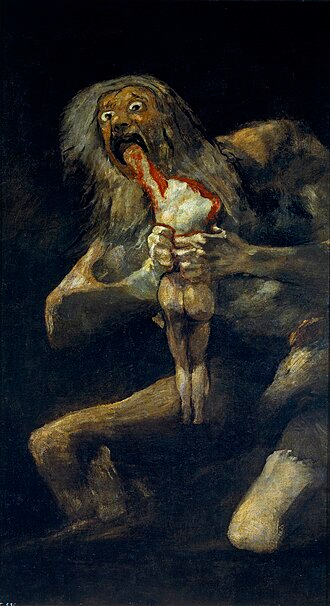
Kronos’ mythology involved poor relationships with His father and children, so perhaps that offers some rationale for why often childless, unmarried men with daddy issues (i.e., the gays) were linked to Him astrologically. This is, admittedly, a far less romantic notion than the high-minded “Uranian Love”…
I won’t go too much further into Hellenistic Astrology in this part of the blog, but it is also worth noting other examples that align with Van Dam. Firmicus Maternus outlines dozens of configurations throughout his work Mathesis that could pertain to male homosexuality. He plainly states one example that fits here:
Saturn in conjunction with the Moon will produce cinaedi. (Liber VII, chapter XXV).
It’s unclear whether that should be taken as a standalone statement or as part of the more complex configuration that precedes it, but Firmicus goes on to give some additional complex configurations which include the Moon and Saturn that also supposedly “make cinaedi.” So this is seemingly a very old notion that Van Dam (and to a lesser degree, Carter) were perpetuating in a way.
Vedic Astrology
Jyotish, also know as Indian or Vedic astrology, never lost touch with its ancient textual corpus the way Western astrology did, and it continues to show a surprising amount of consistency with Hellenistic astrology. These similarities in technique are attributed to transmissions that occurred in antiquity (probably during the Indo-Greek period), which were enshrined by the 4th – 6th century text known as Yavanajātaka (“Greek Horoscopes”).
As a Westerner, I’ve found it difficult to locate sources for jyotish understandings of this topic, let alone assess their reputability. But here are a couple relevant examples I’ve managed to find so far:
Venus and Saturn
Some claim Venus-Saturn conjunctions, aspects, or parivartan (exchanging of signs) found in either D1 or D9 (the birth chart and the navamsa chart, respectively) are indicative of homosexuality in men, while Venus exalted in the 1st or 7th house for either chart can mean homosexuality for women. This is attributed to Parashara, a maharishi who wrote comprehensive astrological treatises in the 7th to 8th Centuries.
This is discussed by Kotekal Guru Rajesh (2010), where he cites Brihat Parasara Hora as saying:
When Venus occupies the Rasi or Navamsa of Mars or when Venus is with Mars or aspected by Mars the native indulges in cunnilingus. When Venus occupies instead the Rasi or Navamsa of Saturn or Venus is conjoined with Saturn or aspected by Saturn, the native indulges in fellatio. (Chapter XVIII-12-14).
This aligns somewhat with modern Western astrology (e.g., Venus in Aquarius, a classic manifestation of the “Uranian Love” discussed above, would be Venus occupying the Rasi of Saturn), but more directly aligns with Hellenistic astrology, which outright accused Saturn afflicting Venus of causing queerness in those who were born male.

According to Firmicus:
Venus on the ascendant by day makes the natives oversexed, unchaste, of ill repute*. They will be linen weavers, embroiderers, or artists in paints, dyers, innkeepers, or tavern-keepers. Saturn in aspect to Venus in any way will make the natives effeminate, homosexuals, or engaged in sedentary activities*. Venus on the ascendant promises a wife at an early age. Saturn, however, in strong aspect produces castrates, or weavers, or inventive workers in colors. Jupiter in favorable aspect will make them managers of royal weaving. (Book III, chapter VI).
*The original Latin word for “ill repute” was infames, a designation often applied to sexually receptive males. “Sedentary activities” is translating servilibus actibus (servile acts). In the context of effeminacy and cinaedia, this obviously refers to sexual service or submission.
The passage notably doesn’t only focus on sexual behavior, or necessarily even men, per se. It includes “castrates” (which could have been male slaves, but might also refer to people like the Gallae who we now regard as trans women), and it also refers to non-sexual attributes of their life, such as working in the art and fashion industries. This potentially offers an insight into a Roman perspective on broader AMAB queerness.
Mercury and Saturn
Other indicators of homosexuality in jyotish can include Mercury associated with the 7th House, Mercury exchanging signs with Saturn, or Mercury and Saturn in trine to the 7th House or navamsa trine to lagna. This is according to forum posts from Freedom Cole, a Vedic astrologer from the U.S. who spent several years studying jyotish in India. Others have claimed these configurations can be found in the birth charts for known gay celebrities such as Rock Hudson, Truman Capote, and Elton John (though I haven’t confirmed this myself).
Freedom Cole claims, “The planets that will make one gay are Mercury and Saturn.” On his website he quotes his guru as explaining that Budha (Mercury) “indicates sex change (both temporary and permanent) as well as homosexuality and in general a confusion of sexes.” He goes on to cite a story from Bavishya Purana which mythologically supports this.
In the story, King Ila was hunting deer, and during the chase accidentally stumbled into a protected grove that was sacred to Parvati and Shiva. As a consequence, Shiva transformed the king into a woman (Ilā), upon which Budha took her to be His wife. According to other sources, Ila / Ilā would monthly change genders in accordance with the Moon.

The Hellenistic astrologer Firmicus also associated Mercury with these themes in similar prescriptions, albeit more negatively. Mercury in the 7th House or on the Descendant in a day chart he scorns as bisexual and scandalous:
[The natives] are always burning with sexual desires and are involved in serious vices. They will be the lovers either of boys or young girls. They are allotted debased women for wives, and often adopt and care for infamous men. For Mercury in this house in signs in which he does not rejoice – that is, in the signs of Mars or Saturn or in others in which he is humiliated – will make pimps and whoremasters, soiled by the scandal of that ill fame. (Book III, Chapter VII)
As noted above, “infamous men” (īnfāmēs virī) was a formal euphemism that implied recipients of homosexual intercourse. The exact meaning of “adopting” this kind of man is unclear. In the context of the sex trade, it could mean trafficking them as workers in a brothel. But given how it is juxtaposed against “being allotted wives,” it could also refer to a more personal relationship (adoption has historically served as a substitute for gay marriage).
Firmicus further agrees with jyotish in a slightly modified form where he states,
If Saturn and Mercury are in a feminine sign [possibly only in night charts] they will make eunuchs, impotent men, base, degenerate, infamous, cinaedi. (Book III, Chapter IX.)
(Tell us how you really feel about queers, Firmicus!)
Firmicus also mentions other configurations with Mercury that supposedly make natives eunuchs or “hermaphrodites.”
There are many additional Hellenistic formulae that link Mercury to queerness, but they usually do so in relation to Venus or Mars rather than Saturn. Further analysis of the sprawling Hellenistic astrological corpus’ commentary on the topic would need its own dedicated article.
Conclusion
My approach has been to identify astrological beliefs about homosexuality which find the most common ground and endurance across time and place, as a starting point for research. However, this provides only a handful of dictums compared to the vast Hellenistic corpus that commented on Queerness. I imagine there is much more material in the Indian tradition than what I found here, too.
While there has been little research into the validity of these techniques, I must say they have not proven very convincing thus far, even as someone who is inclined to believe in astrology. I already addressed the problems with the Ptolemaic and Uranian approaches, but the more traditional Saturnian lens for homosexuality has also yet to yield results. Rajesh (2010) analyzed a sample of 55 prominent gay men and provided statistics for each rule. Some rules are difficult to calculate probability for, but an easy one to consider is “Venus in the sign of Saturn,” which should regularly occur 1/6th of the time. Ten of Rajesh’s gay men had this feature in their chart, which is no more than chance (despite that Rajesh found it fully convincing).
But if it could ever be possible for the stars to determine our sexuality, I would hardly expect it to be so simple as Saturn roaming the ecliptic, zapping Venus or the Moon with His gay beam. In the Hellenistic literature, I’ve found dozens (maybe over a hundred) passages pertaining to gay men, which are all over the map with their techniques. And maybe that’s the reality of the situation: there are many different ways to be gay, and not a single, simple way to identify it.
As Freedom Cole put it, “I wish [orientation] were that easy to calculate,” (referring to known gay men whose horoscopes do not match a couple astrological rules for homosexuality). “Unfortunately we have to take the chart as a whole, if not a computer could calculate your sexuality for you. That would be fun, but there is more to it.”
One last consideration I did not touch on in this article is the ethics of hunting for homosexuals in the horoscope. It’s probably no coincidence that a Nazi (Heimsoth, who was nonetheless gay himself) published the most long-standing manual for how to do this in Western Astrology, and more recently Rajesh (2017) writes:
It would do well for every family as also the police department to familiarize themselves with these guidelines which could enable them to be alert to such individuals within one’s own family and circle of friends and relatives so that they can ensure no one falls prey to their abnormal urges. (Rajesh, 2017)
“Concerning!”
If there were any obvious scarlet letters to find in the horoscope, I am sure the miscreants would have done so by now…
On the other hand, I do think contemplating and divining on this subject can reveal insights into something that is a central topic of our lives. I believe it offers an affirmative explanation of our Nature which, comes from the Heavens and the Gods, rather than viewing it as a “choice” or “sin.” I do believe astrology holds potential for finding gay spiritual and personal fulfillment.
Going forward, my goal would be to fully delineate and assess the Hellenistic corpus on this topic. It not only is much more diverse and complex than the handful of Modern techniques, but also sheds fascinating light on the life and culture surrounding queerness in antiquity. It remains deeply rooted in Pagan polytheism too, which has more philosophical and meaningful interpretations to offer Pagans than modern psychoanalysis does.
Of course, unpacking the Hellenistic literature is a far more ambitious endeavor than what I undertook here. Perhaps I will eventually get to it in a future blog post (or three).
Bibliography
Carter, Charles E. O. An Encyclopaedia of Psychological Astrology. Theosophical Publishing House, 1924.
Cole, Freedom. “Buddhashtami Vrata”. Freedom Vidya, https://shrifreedom.org/vedic-astrology/remedial-measures/buddhashtami-vratta/. Accessed 24 July 2026.
Firmicus Maternus. Matheseos Libri VIII. Translated by Jean Rhys Bram in Ancient Astrology Theory and Practice. Noyes Press, 1975.
Heimsoth, K.-G. Charakter Konstellation. Otto Wilhelm Barth, 1928.
Heimsoth, K.-G. Homosexuality in the Horoscope. Translated by American Federation of Astrologers, 1978.
Parashara. The Brihat Parashara Hora Shastra. Translated in “Astrology and Homosexuality,” by K.G. Rajesh (cf. infra). (See also: https://bphs.blogspot.com/2007/12/ch-18-effects-of-7th-house.html).
Plato. Symposium. Translated by W. H. D. Rouse in Great Dialogues of Plato. Signet Classics, 2015.
Ptolemy. Tetrabiblos. Translated by F. E. Robbins. W. Heinemann Limited, 1940.
Rajesh, K.G. “Astrology and Homosexuality.” Modern Astrology, vol. 28, October 2010.
Rajesh, K. G. Applied Vedic Astrology: Compilation of Published Articles. 2017.
Van Dam, Wim. Astrology and Homosexuality. Samuel Weiser, Inc., 1985.
Vettius Valens. The Anthology. Translated by Mark T. Riley, Amor Fati Publications, 2022.